The More Payment Platforms You Add, The Less Efficient You Become.

Most finance teams in Tanzania/the World spend more time moving money than actually managing it. Walk into almost any mid-sized organization, whether it's an NGO, a cooperative, a school network, a logistics company, or a growing startup, and you'll find the same pattern, payroll runs from one platform, suppliers are paid from another, mobile money disbursements happen somewhere else, while someone is buried in spreadsheets trying to reconcile everything afterwards. It isn't because finance teams enjoy complexity, it's because Tanzania's payment ecosystem evolved in silos. Banks built their own infrastructure, mobile money providers built theirs, payment companies added another layer, and businesses were left to connect everything themselves.
The result is what I call an invisible payments department, one that quietly exists inside almost every organization. Finance teams switch between dashboards all day, reconciliation becomes a monthly headache, bulk payouts take longer than they should, transaction costs quietly accumulate, and manual processes introduce errors that shouldn't exist in 2026. Most organizations don't even notice the cost because these routines have become normal, but if you calculate the hours lost every month simply moving information between disconnected systems, the operational drag becomes impossible to ignore. People who should be analyzing budgets and planning growth are instead spending their time matching transactions.
What's interesting is that many businesses believe digital transformation means adding more software. Another payment gateway. Another banking portal. Another reconciliation tool. Another dashboard. But more tools don't automatically create better operations. In fact, they often do the opposite, creating more places to log in, more reports to download, more systems to monitor, and more opportunities for information to become fragmented. The goal shouldn't be to digitize complexity, it should be to remove it altogether.
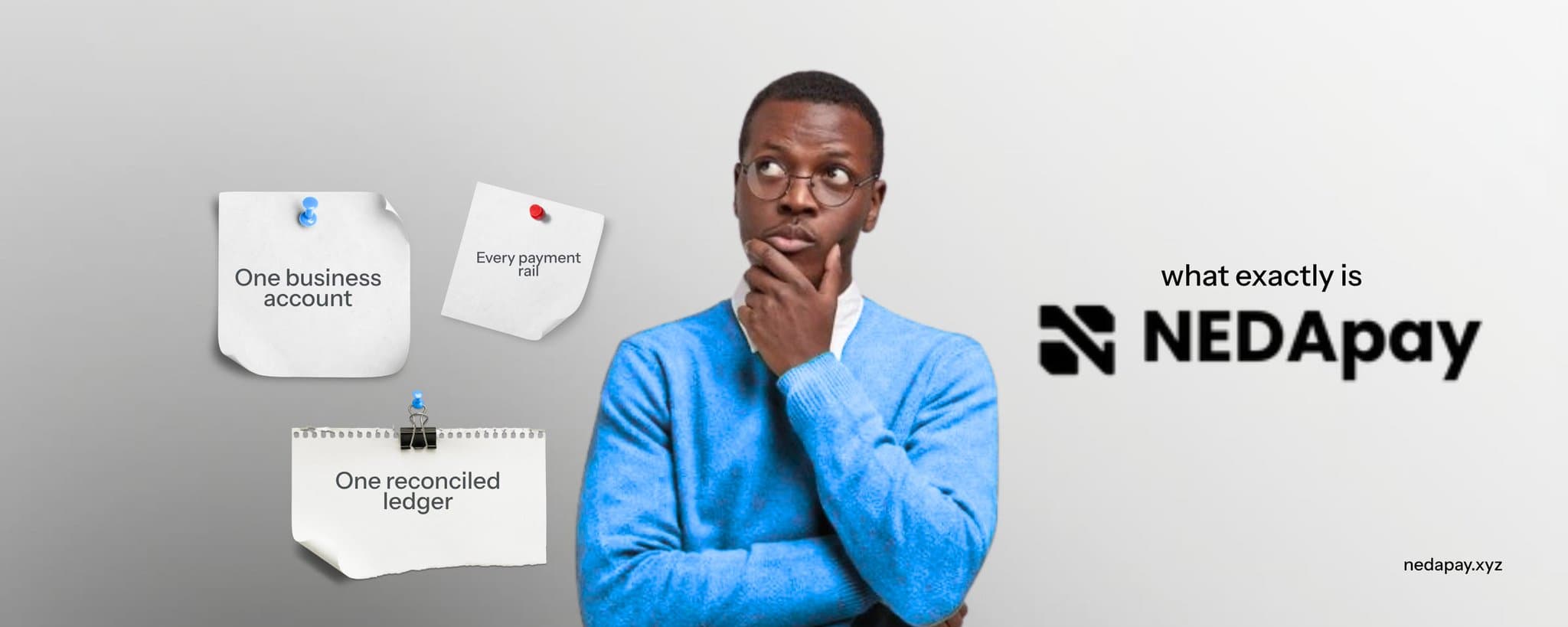
That's the thinking behind NEDApay. Instead of asking organizations to manage collections, bank transfers, mobile money, payroll, reporting, and reconciliation across different platforms, NEDApay brings those workflows together into one business account with one unified dashboard and one continuously updated ledger. Incoming payments are automatically recorded, payroll, vendor payments, grants, stipends, bank transfers, and mobile money disbursements happen from the same place, giving finance teams a single source of truth instead of asking them to stitch together five different ones.
The biggest advantage isn't simply convenience, it's visibility. When every transaction exists within one financial ecosystem, reconciliation becomes continuous instead of something you dread at the end of the month, cash flow becomes easier to understand, reporting becomes faster, and finance teams can spend their time making decisions instead of fixing processes. Technology should reduce operational overhead, not create it, and the best financial infrastructure is often the one that quietly disappears into the background, allowing businesses to focus on growth instead of administration.
As Tanzania's digital economy continues to mature, organizations don't need more payment platforms, they need fewer disconnected ones. They need infrastructure that makes financial operations simpler, faster, and more transparent from day one. Digital transformation isn't about adding another tool to the stack, it's about removing the need for several of them.
That's the future NEDApay is building, one where finance teams spend less time moving money, and far more time managing it.