

From Four Accounts to One
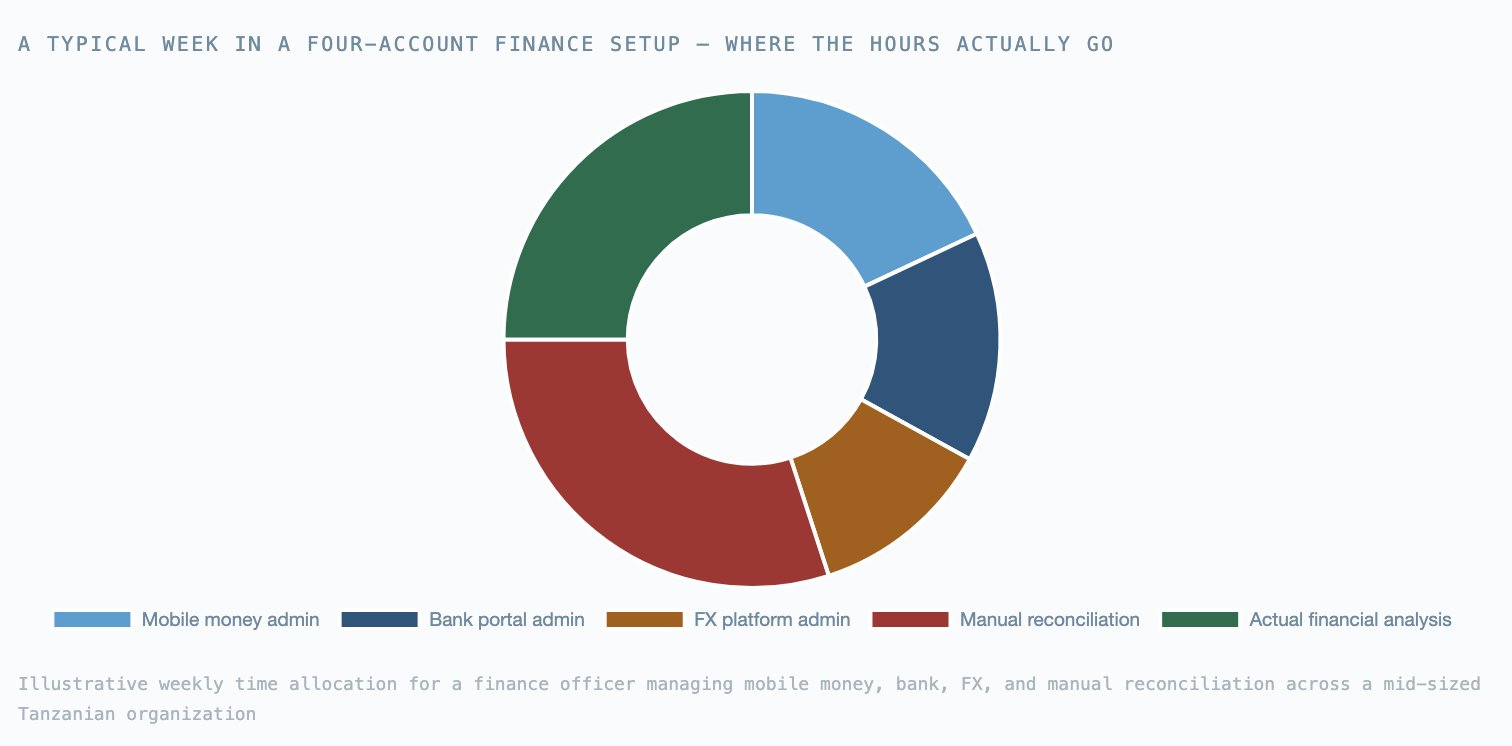
Mobile money for collections. A bank account for payroll. An FX platform for cross-border. A spreadsheet to hold it all together. Every piece made sense on its own. Together, they're quietly costing your organization more than any single fee line shows. Open the laptop of a typical Tanzanian / Kenyan finance manager and you'll usually find the same four tabs pinned: a mobile money business dashboard for retail and field collections, a commercial bank portal for supplier and payroll payments, a separate cross-border or FX platform for anything international, and a spreadsheet that exists purely to stitch the other three together into something resembling a single financial picture.
None of these four were chosen badly. Each solved a real, immediate problem at the time it was adopted. The mobile money account made sense because that's how customers pay. The bank account made sense for payroll and formal supplier relationships. The FX platform made sense once the organization started dealing internationally. The spreadsheet made sense because nothing else was reconciling the first three automatically.
The result, a few years in, is a finance function quietly built around managing four disconnected systems rather than managing money.
The math isn't additive. It's multiplicative.
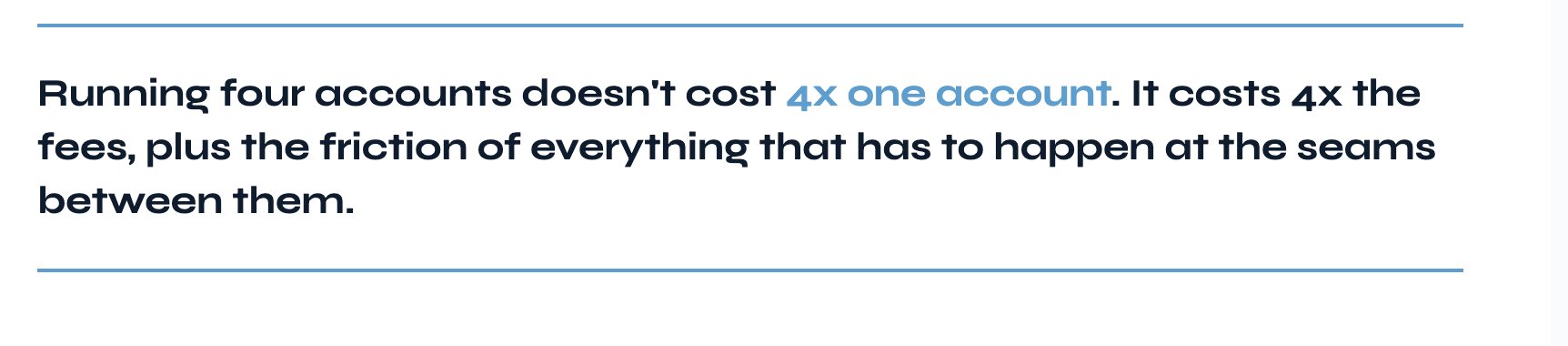
It's tempting to think running four payment accounts costs roughly four times what running one would cost whether in transaction fees, cost of opportunity, prefunding costs or even idle funds. In practice, the cost compounds faster than that, because each additional account doesn't just add its own overhead it adds friction at every point where the accounts have to interact with each other.
Fees don't share volume: Splitting transaction volume across four platforms means none of them ever reach the threshold where you might negotiate better rates, you pay retail pricing on one.
Cash visibility fragments: Knowing your true, consolidated cash position requires checking four balances and adding them manually a five-minute task that becomes a daily tax on a finance officer's attention.n every channel in.
Compliance work multiplies: Four platforms means four separate KYC renewal cycles, four sets of statements to retain for audit, and four different report formats to translate into one internal record.
Errors compound at the seams: Mistakes rarely happen inside a single platform, they happen in the gaps between platforms, when a transaction recorded in one system doesn't match how it shows up in another.
Putting a number on a year of running four accounts
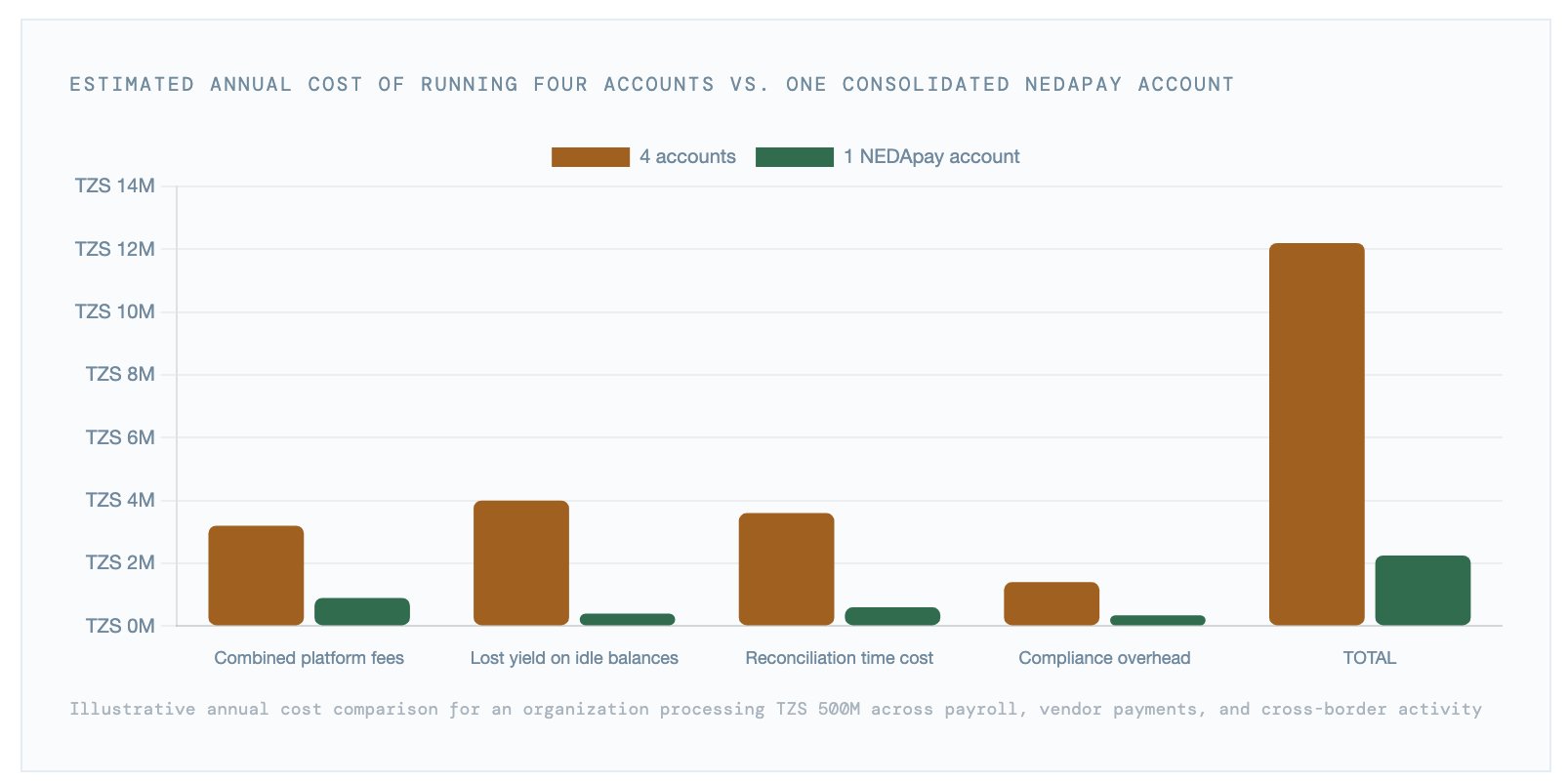
Take a mid-sized Tanzanian organization processing roughly TZS 500 million a year across payroll, vendor payments, and occasional cross-border transactions. Spread across four disconnected accounts, the combined cost fees, lost yield, reconciliation time, and compliance overhead adds up to a number most finance teams have never actually calculated in one place.
Most people think NEDApay is just another payment app.
It isn’t. NEDApay is a business payments platform that supports a variety of USD and non-USD stablecoins such as nTZS, Tanzania’s first Bank of Tanzania-supervised digital shilling while giving organizations a single place to receive, hold, manage, and move money across multiple payment rails.
Instead of juggling separate bank accounts, mobile money wallets, spreadsheets, and payment providers, businesses operate from one dashboard with one always-reconciled ledger.
For finance teams, that changes everything.
Every organization in Africa that moves money to many people, staff, vendors, members, beneficiaries, is running an invisible payments department made of mobile money, bank portals, and spreadsheets. NEDApay replaces all of it with one account. Below is a finance officer's week, before and after.
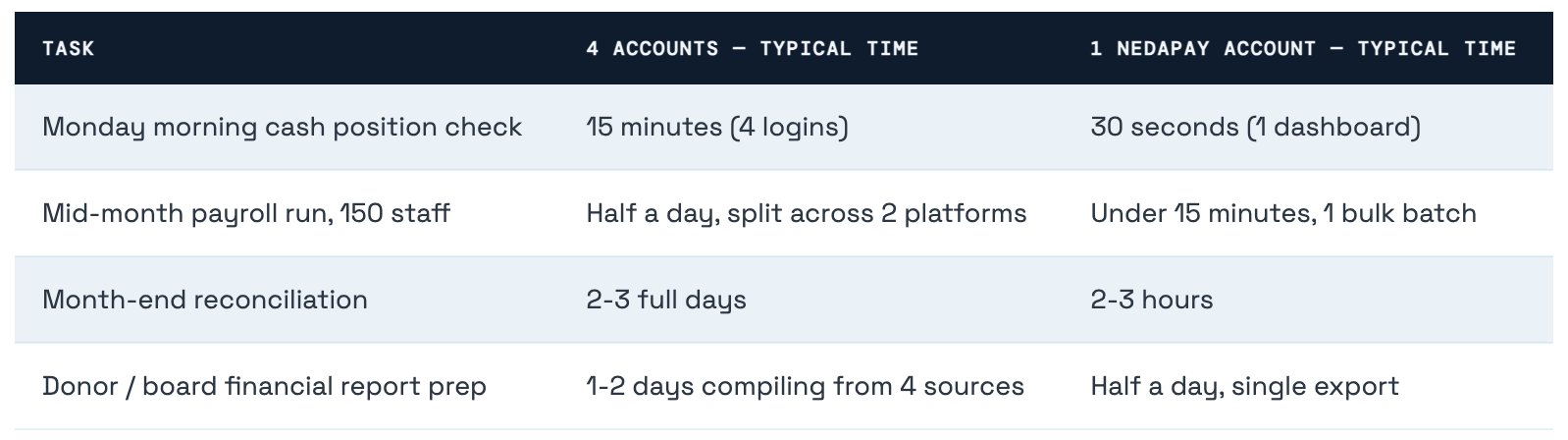
None of this requires the finance team to work differently or learn a fundamentally new skill set. It requires the underlying infrastructure to stop forcing them to do, manually, what a single regulated ledger should be doing automatically.
Every additional payment platform an organization adopts solves a real problem in the moment it's adopted. The cumulative cost of all of them together in fees never pooled, yield never captured, and hours spent reconciling at the seams is rarely visible until someone actually adds it up. NEDApay exists specifically to remove that multiplication: one account, every payment channel, one ledger your finance team can trust without manually rebuilding it every month. Whether you’re collecting payments, managing cash flow, or sending funds at scale, NEDApay gives finance teams the infrastructure to move money more efficiently without the operational complexity that’s become standard across modern businesses.